CALLIGRAPHY (SHODO: 書道)
2013 – Present
Discovering Shodo
At age seven, I discovered an art form that would change my life. A friend suggested I try Japanese calligraphy (Shodo) since I loved drawing and creating art. When I held a calligraphy brush for the first time and watched the ink flow across crisp white paper, I was mesmerized.
Shodo isn’t just writing—it’s an art form that combines meticulous technique with creative expression. Each brush stroke must be precise yet fluid, controlled yet spontaneous. The balance between black ink and white space, the rhythm of the strokes, the way a single character can convey both meaning and emotion—all of this captivated me from the very beginning.
What started as weekend calligraphy classes at the Vancouver Japanese Language School and Japanese Hall became a twelve-year journey into an ancient artistic tradition.
Shodo demands discipline. There’s no erasing, no going back. Every stroke is permanent, which means every movement must be intentional. You must control the pressure of the brush, the angle of your wrist, the speed of each stroke. One moment of hesitation or imprecision is immediately visible.
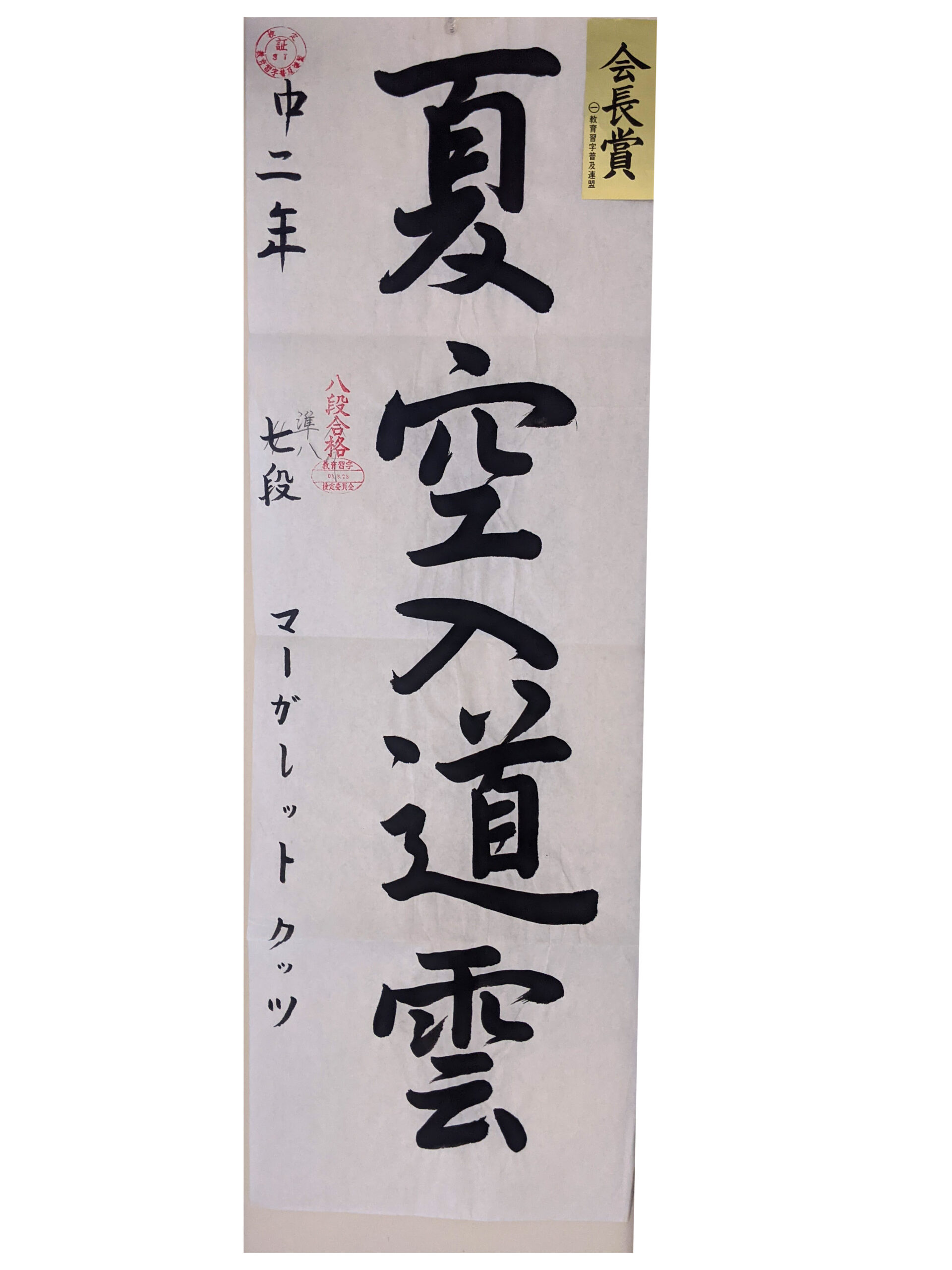
But within this rigorous discipline lies incredible artistic freedom. The same character can be written in countless styles—from the precise, angular strokes of Kaisho (楷書, block style) to the flowing, cursive beauty of Sosho (草書, grass style). Each style requires different techniques, different energy, different artistic sensibilities. The adult-level classes I now attend challenge me to move beyond technical proficiency toward genuine artistic expression—finding my own style within this centuries-old tradition.
Achievements and Recognition
I am now writing at the master-level curriculum. Over the years, my dedication to Shodo has been recognized through numerous awards and honors:
Teacher Certification
- Elementary School Level Certificate – Qualified to teach Shodo to elementary school students
- Middle School Level Certificate – Qualified to teach Shodo to middle school students
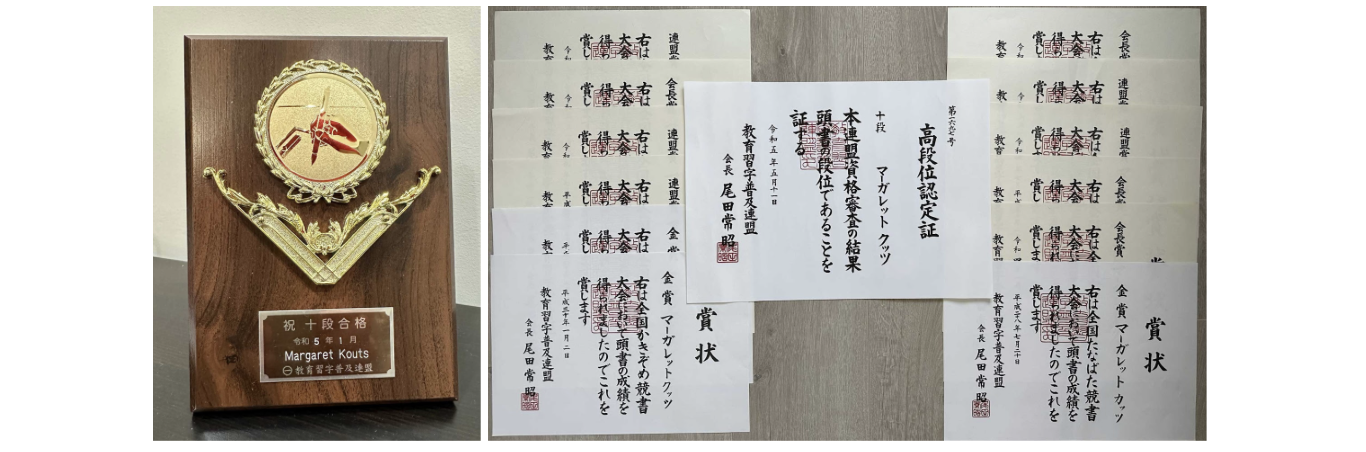
- Achieved Top 10th Dan (2023) – Completed the student course, the highest level of student achievement
Competition Awards
I have participated in two major annual calligraphy competitions, earning dozens of awards:
Tanabata Calligraphy Competition (全国七夕競書会)
- Multiple Federation Awards
- Multiple President’s Awards
- Multiple Silver Prizes
- Multiple Gold Prizes
Kakizome Calligraphy Competition (全国書き初め競書会)
- Multiple Federation Awards
- Multiple President’s Awards
- Multiple Silver Prizes
- Multiple Gold Prizes
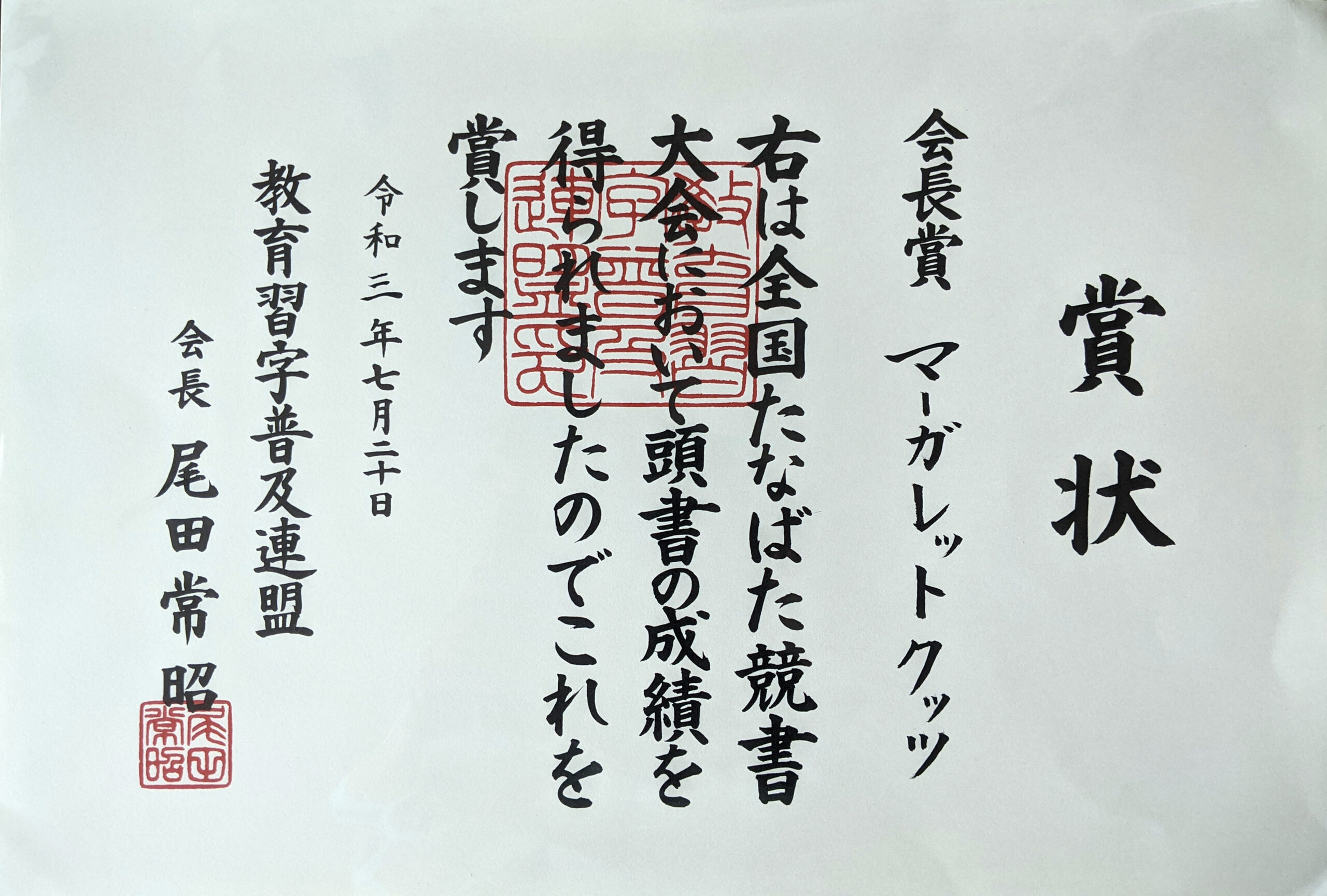
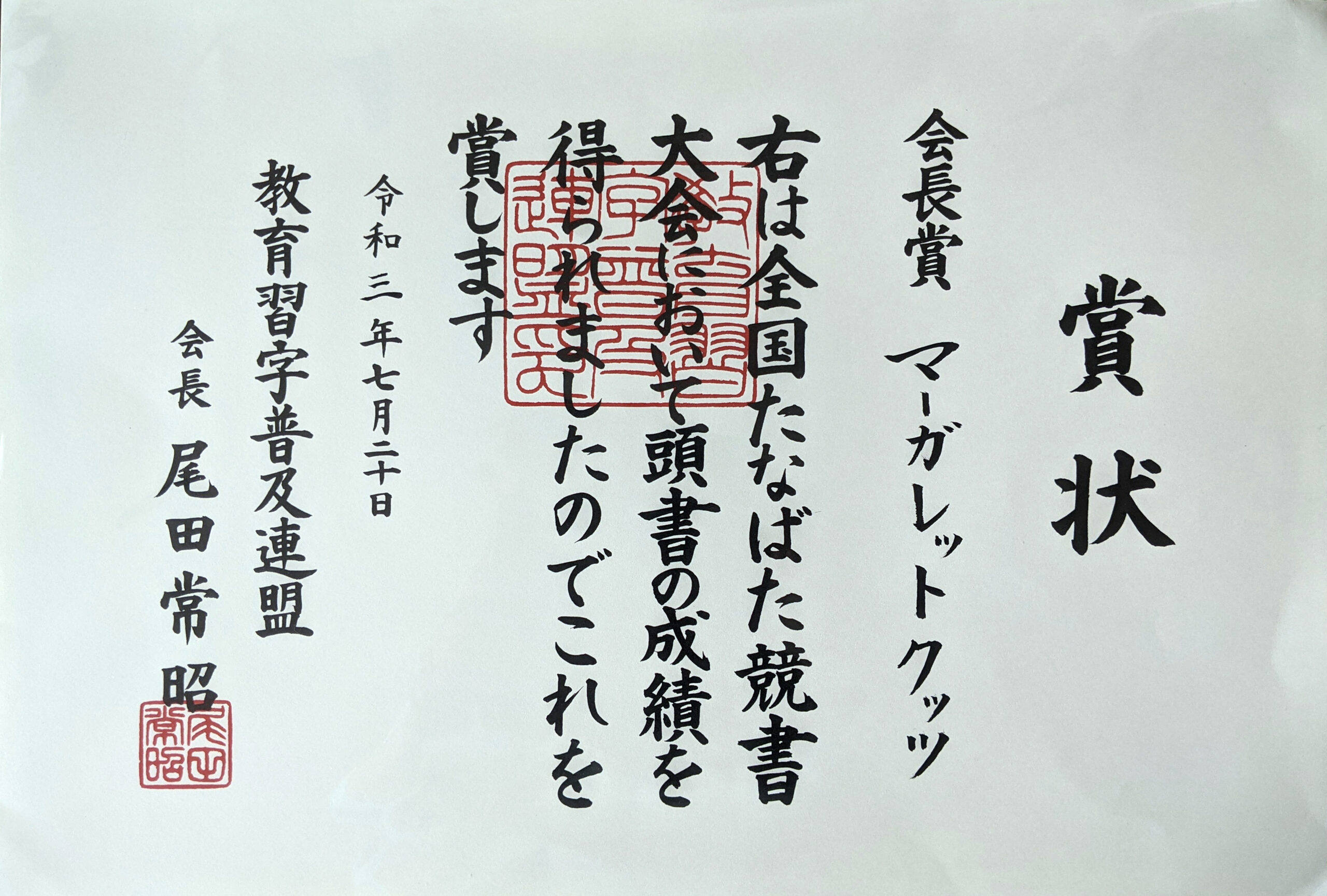
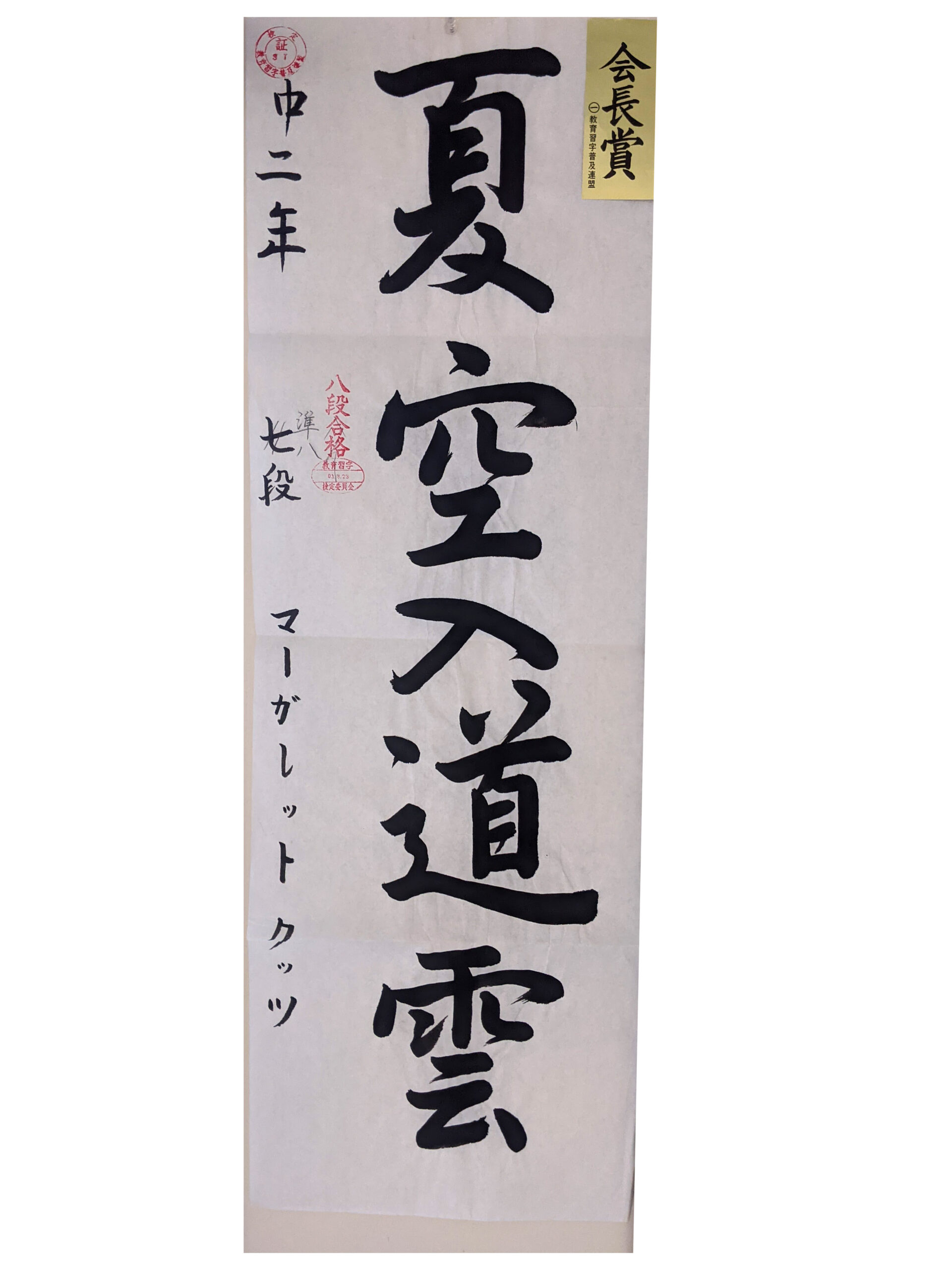
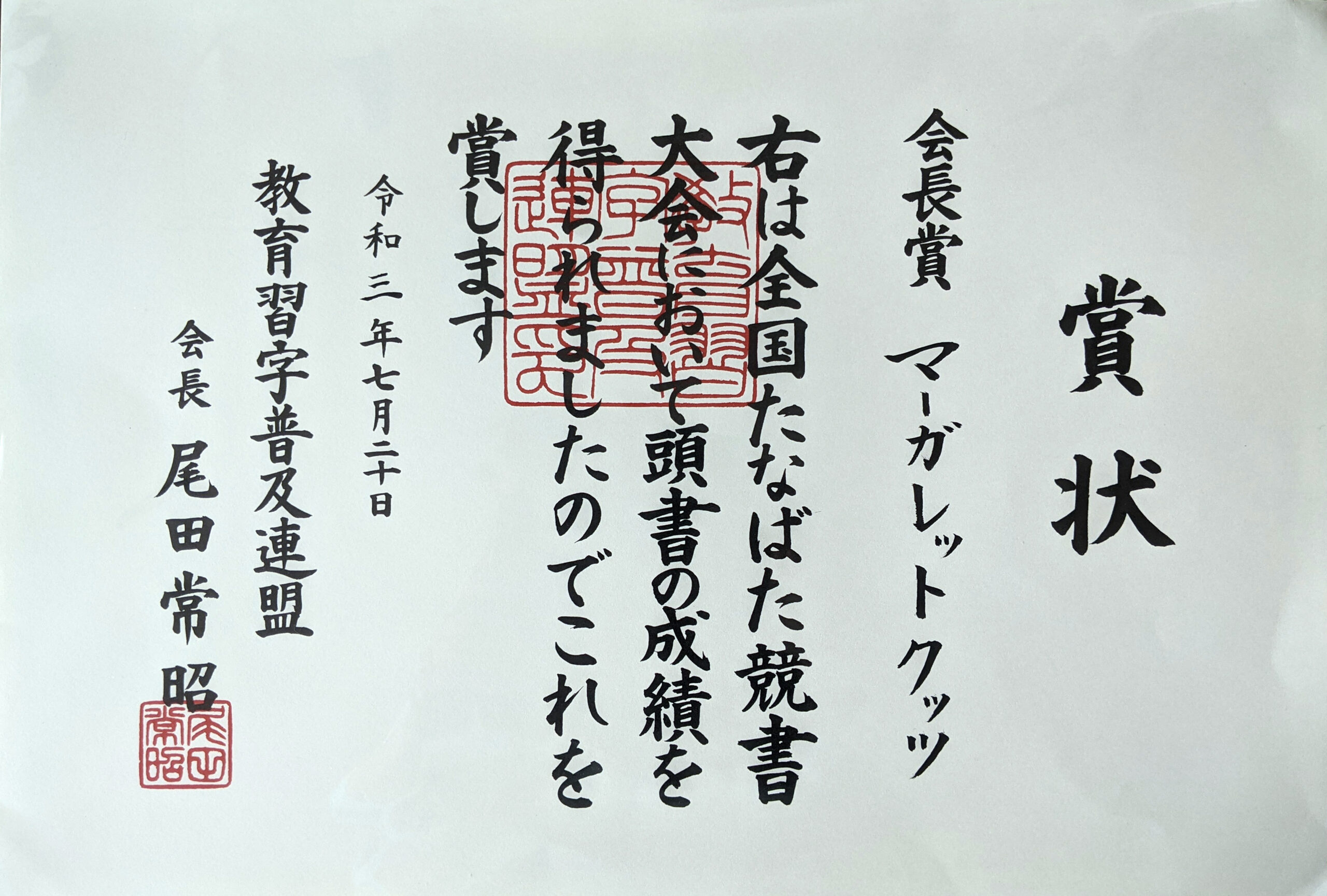
Chairman’s Awards
- Received the prestigious Chairman’s Award twice for exceptional calligraphy work
These competitions bring together calligraphers from across North America, and receiving recognition among such talented artists has been deeply meaningful. Each award represents not just technical skill, but hours of practice, patience, and dedication to the art form.
Why It Matters
Shodo taught me that mastery isn’t about reaching a final destination—it’s about continuous practice and refinement. Even after twelve years, I’m still learning, still discovering new dimensions of this art form.
The discipline, patience, and attention to detail that Shodo requires have influenced everything else I do. Whether I’m perfecting a gymnastics routine, solving a complex statistical problem, or planning a history tour, I bring the same mindful presence and commitment to excellence that Shodo has instilled in me.
But beyond skill development, Shodo has given me a profound connection to Japanese culture and aesthetics. It opened the door to learning Japanese, which led to discovering the history of Japanese Canadians, which ultimately resulted in founding the VJLS History Club.
Learn more about the VJLS History Club and how I’m preserving this community’s story
Learn more about my path with the VJLS
The Brushstroke That Cannot Be Undone
There is a moment in shodo — Japanese calligraphy — that happens over and over, and yet never stops teaching me something. The brush touches the paper. The ink spreads. And in that instant, the choice is made. There is no undoing it. No eraser, no backspace, no gentle correction. What’s on the page is on the page.
At first, I found this binding and uncomfortable. Every other art form I know offers some mercy — you can sand the wood, repaint the canvas, delete the sentence. But the black mark of sumi is immediate and absolute. The moment your brush lifts, the decision has already become history.
I’ve come to think this is exactly the point.
Sometimes, mid-stroke, I feel it go wrong. The line drifts a little too far left, the pressure increases when it should relax, the character leans in a way I didn’t intend, or the speed of my brush movement is erroneous, causing deficiency in the thickness of the stroke. In that split second, something in me wants to stop — to protect the piece, to control the outcome, to fix what feels broken. But shodo doesn’t allow that kind of control. It only allows two real responses: stop entirely or keep going and let the stroke be what it is.
What’s strange is how often “letting it be” turns out to be the better choice. I’ll finish a character certain that I ruined it, only to step back later and see that the mistake gave the piece a special ethos. At other times, this is not the case. But even then, nothing is lost. The failed attempt taught the hand something the successful one couldn’t have.
What shodo has quietly been teaching me, stroke by stroke, is that the anxiety of a mistake and the reality of a mistake are two different things. In the moment, an unexpected line feels like a crisis. On paper, it’s just a mark. Whether it’s a flaw or a feature is often decided not in the instant it’s made, but in how you meet what comes after it — whether you tense up and hesitate or trust the motion and finish with the same confidence you started with.
I think this is a rare kind of practice for a mind that’s used to revising everything. So much of modern life is edit-friendly: we draft, we undo, we delete and retype until it’s right. With ink, there is no revision. There is only this stroke, and then the next one, and the acceptance that they will form whatever they form. You can’t go back. You can only keep moving forward with what’s already there — which, in my opinion, is an admirable mirror of life.